
• Link to LinkedIn Link to LinkedIn Link to LinkedIn
  • Link to Facebook Link to Facebook Link to Facebook
  • Link to Bluesky Link to BlueskyLink to Bluesky
  • Link to Mastodon Link to MastodonLink to Mastodon
  • Link to Mail Link to Mail Link to Mail
  • Link to Rss Link to Rss Link to Rss
  • Dogsbody Technology Charity Support 2025
Contact us: 01276 818576
Dogsbody Technology
  • Emergency support
  • Infrastructure Services
    • Infrastructure Design
    • Infrastructure Build
    • Server management and monitoring
    • In-life Support
    • Pen Testing & Audit
    • Hosting Services
      • Plesk Hosting
      • VPS & Dedicated Servers
      • Tor Hosting
  • Happy Customers
  • About Us
  • Careers
    • Write your own job
  • News & Views
  • Contact Us
  • Menu Menu

CVE-2015-7547 glibc vulnerability

18 Feb 2016/1 Comment/in Security/by Rob Hooper

In the past few days Google has identified a vulnerability in glibc (GNU C Library). It allows attackers to crash processes and potentially run code remotely on your server.

The vulnerability itself is best described by the Google Security Team’s blog-post. To summarise:

“The glibc DNS client side resolver is vulnerable to a stack-based buffer overflow when the getaddrinfo() library function is used. Software using this function may be exploited with attacker-controlled domain names, attacker-controlled DNS servers, or through a man-in-the-middle attack… …Remote code execution is possible, but not straightforward.”

glibc is a library which provides many basic functions and system calls to C programs. Since libraries are only loaded in when a program is started, this means that only daemonised (a process which is left running in the background) programs are effected. When those programs are restarted they will load in the new glibc library which mitigates the issue.

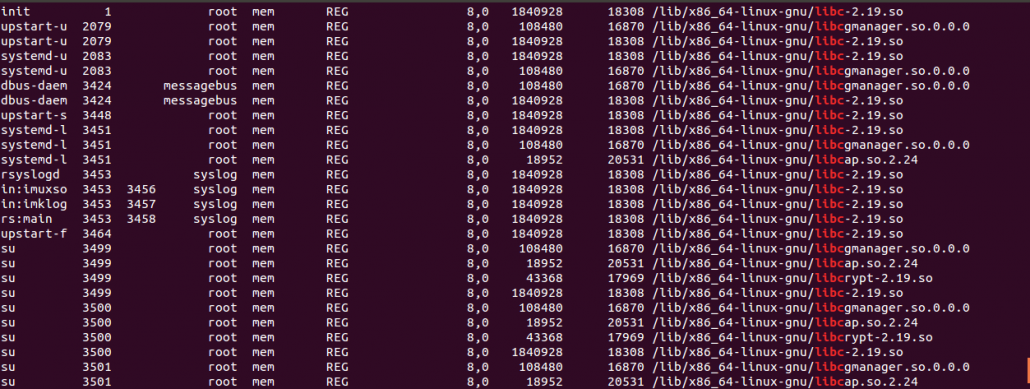
You can get a list of all programs using glibc by running a command such as:

sudo lsof | grep libc | cut -d' ' -f 1 | sort | uniq

This shows that glibc is tied into nearly every service on a typical Linux system.  It can quickly become a large job to restart each process, especially in the correct order.  The quickest way of doing this is by rebooting your server.

Our advice regarding this matter is:

  1. Ensure the latest glibc packages are installed.
  2. Reboot your server (or restart all processes that use glibc)

Feel free to get in touch if we can help with this.

Tags: glibc, patching, Security
Share this entry
  • Facebook Facebook Share on Facebook
  • Whatsapp Whatsapp Share on WhatsApp
  • Linkedin Linkedin Share on LinkedIn
  • Reddit Reddit Share on Reddit
  • Mail Mail Share by Mail
https://www.dogsbody.com/wp-content/uploads/lsof-libc-e1455811006988.png 473 1253 Rob Hooper https://www.dogsbody.com/wp-content/uploads/Dogsbody-site-logo-1.png Rob Hooper2016-02-18 15:36:582016-02-18 15:36:58CVE-2015-7547 glibc vulnerability
You might also like
Cyber Security Awareness Month 2017
CVE-2014-0160 – Heartbleed
Removing support for TLS 1.0 and TLS 1.1
Tripwire – How and Why
CVE-2014-3566 – POODLE
How to set-up fail2ban for a WordPress site
HashGate HashGate: An intrusion detection tool
Let’s Encrypt: Security Everywhere
1 reply

Trackbacks & Pingbacks

  1. Manual patching vs auto patching – Dogsbody Technology Ltd. says:
    30 Jan 2018 at 12:51

    […] The admin can search for dependant applications that maybe using a library that has been patched (i.e. glibc patches) […]

    Reply

Leave a Reply

Want to join the discussion?
Feel free to contribute!

Leave a Reply Cancel reply

Your email address will not be published. Required fields are marked *

We are Dogsbody. We take the pain away from building, securing and maintaining IT infrastructure.

Find out how we can help your business

Everything we do is about security. Our team is our strength.

Get in touch

Latest thoughts and news

  • Our Trusted Suppliers after 15+ Years
  • Avoid Surprise AWS RDS Charges in 2026
  • A Season of Giving: Dogsbody Technology Charity Support 2025
  • Wrapping Up 2025: Our Christmas Hours
  • PHP 8.1 will go end of life – 31 Dec 2025
Search Search

Useful links

  • About Us
  • Dogsbody News & Views
  • Contact Us

Linux & cloud services

  • Infrastructure Design
  • Infrastructure Build
  • In life Support
  • Infrastructure Audit
  • Penetration Testing
  • Hosting Services

In life support

  • Overview
  • Helpdesk support
  • Server management and monitoring

Careers

  • Working at Dogsbody
  • Write your own job description
© Copyright 2010-2026 Dogsbody Technology Ltd - Registered in England and Wales 07236558
  • Link to LinkedIn Link to LinkedIn Link to LinkedIn
  • Link to Facebook Link to Facebook Link to Facebook
  • Link to Bluesky Link to BlueskyLink to Bluesky
  • Link to Mastodon Link to MastodonLink to Mastodon
  • Link to Mail Link to Mail Link to Mail
  • Link to Rss Link to Rss Link to Rss
  • Contact us
  • Terms of use
  • Privacy policy
Link to: Data Privacy Day 2016 Link to: Data Privacy Day 2016 Data Privacy Day 2016Privacy Link to: DROWN vulnerability Link to: DROWN vulnerability DROWN vulnerability
Scroll to top Scroll to top Scroll to top